Eduprime Singapore
Sports Coaching Singapore with a Private 1-to-1 Coach
Sports coaching in Singapore with Eduprime pairs one learner with one private coach for swimming, tennis, badminton, ball games, martial arts, gymnastics, pilates or fitness. Sessions run at a pool, court or gym near home, with a coach suited to that town and those training days, or online for theory and conditioning. Primary pupils, CCA hopefuls and late-starting adults all train this way, with their own venue and gear.
4.8 average from 1,771 reviews across these programmes
What a lesson costs
Fees
What a lesson costs
Every programme is priced per 60-minute session in three formats. These are the lowest figures among the programmes on this page; each programme page shows its own.
- Widest availability
Online International Tutor
fromS$22/ session
60-minute session
The widest bench of tutors across time zones, so a slot is open at almost any hour. Lessons run online over a shared screen.
Online Local Tutor
fromS$37.40/ session
60-minute session
A tutor based here who knows our schools, syllabuses and exams, teaching online.
Home Tutor
fromS$44/ session
60-minute session
A local tutor who comes to the learner, at home or at a nearby study spot, matched to their town and timetable.
Minimum 4 sessions. Larger packages lower the per-session price. One-time S$15 registration fee for new learners.
Last updated
What is one-to-one sports coaching and who is it for?
One-to-one sports coaching means one coach working with one learner for a full 60-minute session, on a plan built around that learner's sport, level and goal.
Most sessions run where the learner already trains near home: a condominium court, pool or gym, or a public facility the learner has booked, with the coach chosen to suit that town and the learner's free days. Online sessions suit theory, video review and conditioning work done at home. Each coach we send is experienced and skilled in the sport they coach, and the plan is written for the person in front of them.
The learners vary widely. A Primary 2 pupil who still grips the pool edge, a Secondary 3 player who wants a place in the school badminton team, a working adult returning to tennis after ten years and a retiree building balance all start from the same first consultation. A swimmer, a shuttler and a boxer each need a different specialist, so Eduprime picks every coach for the sport itself from well over 12,000 tutors on our books. Sport is one family of lessons inside the 148+ programmes we teach.
Which sport fits my goal?
Start from the goal, then pick the sport: water safety points to swimming, a fitness target points to personal fitness coaching, discipline points to a combat sport, and a CCA or DSA ambition points to the court or field game the learner already plays.
The table reads across one goal at a time. The venue column matters as much as the sport, because the learner arranges and books the place where lessons happen, so a goal that needs a pool or a court is easiest when one is close to home.
| Goal | Sports that fit | What the first 4 sessions focus on | Usual venue | Page to read next |
|---|---|---|---|---|
| Water safety | Swimming | Floating, breathing out under water, survival skills of the SwimSafer 2.0 national programme | Condominium or public pool | Swimming lessons |
| Fitness and weight | Personal fitness, boxing | Baseline of push-ups, sit-ups and a timed run, then a weekly routine | Home, condominium gym or online | Personal fitness coaching |
| Self-defence and discipline | Taekwondo, muay thai, boxing, martial arts | Stance, guard, footwork and controlled pad work | Home space with mats, or a hall | Taekwondo, muay thai, martial arts |
| Court game for CCA | Badminton, tennis, table tennis, basketball, volleyball | Footwork, grip and the one stroke that costs the most points | Public court or school hall | The sport's own page |
| Posture and core | Pilates, gymnastics | Breathing, alignment and body control on the mat | Home space or online | Pilates, gymnastics |
| Team play | Futsal, sepak takraw, basketball | First touch, passing angles, movement off the ball | Public court or hard court | Futsal, sepak takraw |
What suits a young learner, a teenager or an adult?
Every stage can start one-to-one coaching; what changes is what school or national schemes already cover and how much activity Singapore's health guidelines ask for each week.
Read the middle column first. It shows what a learner at that stage already meets through school or national service, so the coaching hours go to what is missing.
| Stage | What school or national schemes already cover | What one-to-one coaching adds | Weekly activity guideline |
|---|---|---|---|
| Lower primary | PE lessons; SwimSafer usually arrives in Primary 3, when schools typically enrol the whole cohort | Water confidence before Primary 3, coordination and a first racket or ball skill | 24-hour guidelines for ages 7 to 18 (January 2021): at least an average of 60 minutes per day of moderate-to-vigorous intensity physical activity in a week, where more is better |
| Upper primary | NAPFA with six stations, from sit-ups to a 1.6 km walk-run | Station technique, a CCA sport skill, preparation for a sports DSA application in Primary 6 | Same 24-hour guidelines for ages 7 to 18 |
| Secondary and JC | PE, CCA training and the National School Games | Individual technique the team session has no time for, match analysis by video | Same 24-hour guidelines for ages 7 to 18 |
| Adult | IPPT for those in national service, with push-up, sit-up and 2.4 km run stations | A learn-from-zero path, a return to a sport, or IPPT conditioning | SPAG 2022: 150 to 300 minutes of moderate aerobic activity a week, strengthening at least two days |
| Older adult | Community programmes on the ActiveSG app | Strength and balance work at a safe pace, at home or online | SPAG 2022: strength and balance on at least 3 days a week |
Private coach, group class or school CCA: which one?
A school CCA builds team life, a group class spreads the cost of a coach, and a private one-to-one coach gives every minute of the session to one learner's technique and goal.
Many learners combine them. A CCA player who keeps training with the school team often adds a fortnightly private session to fix a single weakness, such as a late split step in badminton or a dropped elbow in freestyle, and brings the fix back to team training.
| Point | One-to-one coach (Eduprime) | Group class | School CCA |
|---|---|---|---|
| Attention per learner | The whole 60 minutes on one learner | Shared across the class | Shared across the team |
| Pace | Moves on as each drill is mastered | Set by the class average | Set by the season and fixtures |
| Schedule | Agreed around the learner's timetable | Fixed class slot | Fixed school training days |
| Venue | Learner's home facility or a court or pool the learner books | Provider's venue | School facilities |
| Progress notes | Tutor notes after every session and a monthly progress report | Varies by provider | Teacher and team feedback |
| Cost logic | A coach for one learner, sold in packages starting at 4 sessions, with rates in this page's price table | Coach cost divided among the class | Part of school life |
Where do lessons happen and who books the court or pool?
The learner chooses and books the venue, and the coach comes to it: a condominium facility, a public court or pool, a school or club facility the learner can use, or a clear space at home.
Public sports facilities are booked through Sport Singapore's ActiveSG app, which handles facility bookings, swimming and gym access and fitness programmes. ActiveSG Circle describes MyActiveSG+ as the booking platform for pool and gym passes, facility slots and programmes. The learner holds the booking and pays any facility charge directly.
At the first consultation we ask which venue the learner can use, then match a coach by town and timetable so the court or pool is within reach for both. Online lessons need no venue at all, which suits theory, video review of match footage, and fitness or conditioning sessions done in a living room.
- Condominium pool, tennis court, gym or function room
- Public court, hall or pool booked by the learner through the ActiveSG app
- A school or club facility the learner already has access to
- A cleared space at home with a mat, for fitness, pilates or martial arts drills
- A laptop or phone, for online theory, video review and conditioning
What does the learner bring to the first lesson?
The learner brings and owns all personal gear; the coach brings the lesson plan and drill sheets for that sport.
Gear stays with the learner because fit and grip are personal, and a racket or glove that suits one hand rarely suits another. Check the list for the sport group before the first session.
- Swimming: swimsuit, goggles, cap and towel, with pool access arranged
- Tennis, badminton, table tennis: own racket or bat, non-marking court shoes, balls or shuttles
- Basketball, volleyball, futsal, sepak takraw: own ball and court shoes
- Boxing, muay thai, taekwondo, martial arts: gloves, wraps, pads and the uniform the sport asks for
- Gymnastics and pilates: a mat and a safe, padded space
- Fitness: a mat, a water bottle and any weights the learner already owns
How is outdoor training kept safe in Singapore heat?
Singapore's Heat Stress Advisory, which the government launched on 24 July 2023, rates outdoor heat at three levels: low, moderate and high.
The advisory is based on the Wet Bulb Globe Temperature, or WBGT, and at launch the readings came from nine sensors operated by NEA. Each level comes with guidance on three things: adjusting activities, taking protective action and choosing attire. Learners can read the current level on the myENV app or on weather.gov.sg before any outdoor session.
Open courts for tennis, futsal or basketball sit fully under the advisory, while a hall for table tennis or a living room for pilates sits out of the sun. The checklist below turns the advisory's three areas of guidance into steps a learner can take before an outdoor hour.
- Check the advisory level on myENV or weather.gov.sg before leaving for an outdoor session.
- At moderate, read the advisory's guidance on adjusting activities, then plan shaded water breaks and light, loose clothing.
- At high, follow the advisory's guidance for that level, and weigh an indoor hall the learner has booked or an online session for technique and video review.
- Bring enough water for the full hour, and settle at the first consultation which indoor venue the learner can book as a backup.
How does private swimming coaching relate to SwimSafer in school?
SwimSafer 2.0 is Singapore's National Water Safety Programme that many pupils meet in Primary 3; private swimming lessons build the water confidence and strokes a learner needs, while each SwimSafer stage is conducted and assessed by Sport Singapore accredited SwimSafer 2.0 instructors and assessors.
MOE told Parliament in April 2021 that the school programme is fully funded by MOE and typically runs during curriculum time. In 2019, 83% of pupils in the school programme reached at least Stage 1, 55% at least Stage 2 and 39% at least Stage 3. Those figures show how many pupils leave the school programme with the higher stages still ahead of them.
Private lessons fill that gap at the learner's own pace. Our swimming lessons Singapore page covers the strokes, the adult learn-to-swim path and how sessions build toward the next SwimSafer stage.
- Introduced in July 2010 by the National Water Safety Council; version 2.0 has six progressive stages
- Stage 5 is the Silver award and Stage 6 the Gold award, with an e-certificate on completing each stage
- Sport Singapore and Singapore Aquatics run the only official SwimSafer websites
Can coaching prepare a learner for NAPFA or pre-enlistment IPPT?
Yes: a fitness coach trains the exact stations of each test, with drills for technique and a weekly plan for the run.
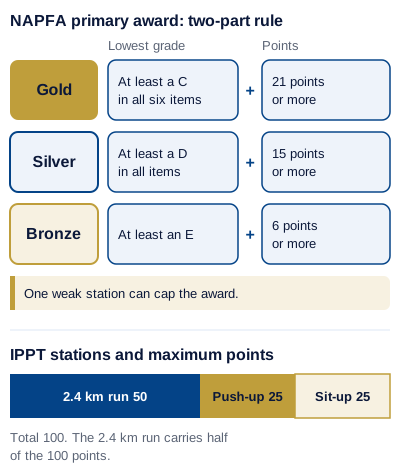
A primary school NAPFA award follows a two-part rule. Gold needs at least a C in all six items and 21 points or more, Silver at least a D in all items and 15 points or more, and Bronze at least an E and 6 points or more. One weak station can therefore cap the award, which is why coaching starts with the lowest grade. The diagram below sets the three award rows next to the IPPT points split.
The IPPT moved to its three-station format with a pilot from 1 September 2014 and full SAF use in 2015. Since the 2.4 km run carries half of the 100 points, a pre-enlistment plan usually spends most of its weeks on running, with push-up and sit-up form checked in every session. Our personal fitness coaching Singapore page carries the full training plan for both tests.
- NAPFA primary stations: sit-ups, standing broad jump, sit and reach, inclined pull-ups, shuttle run, 1.6 km walk-run
- IPPT stations and maximum points: 2.4 km run 50, push-up 25, sit-up 25, total 100
Worked example
Which NAPFA award does Mei reach?
Mei, a primary pupil, finishes the six NAPFA items with 22 points in total. She has a C or better in five items and a D in sit and reach. Which award does she reach, and where does coaching start?
- Test Gold first. Gold needs at least a C in all six items and 21 points or more. Her 22 points clear the points line, but the D in sit and reach misses the grade condition, so Gold is out.
- Test Silver. Silver needs at least a D in all items and 15 points or more. Her lowest grade is a D and her total is 22, so both conditions hold.
- Plan the coaching from the lowest grade. Lifting sit and reach to a C, with the total still at 21 points or more, meets both Gold conditions.
Mei reaches Silver. One weak station caps her award even though her points already clear the Gold line, so her sessions open on sit and reach.
How does coaching connect to CCA, school competitions and DSA?
Private coaching sharpens the individual skills that CCA training, the National School Games and a sports DSA application all draw on, while selection itself stays with schools and team coaches.
The National School Games is the school sports competition. In 2020 MOE described it as 29 sports, 400 championships and ten divisions, with 60,000 student participants a year. A school team player meets a full fixture list, and one-to-one sessions give the time to fix technique between matches, with the tutor notes kept as a record the CCA teacher can read.
Primary 6 pupils can apply for Direct School Admission to secondary school, and sports and games sits among its talent areas alongside the arts, debate, science and engineering, languages, uniformed groups and leadership. On MOE's 2026 calendar, the DSA application window opens in May and closes in early June. Taking up a sports place through DSA binds the athlete to that secondary school: the S1 Posting then offers no school choices, and no transfer follows the PSLE results, so a Primary 6 player weighs the offer slowly, with the coach's notes in hand.
Our DSA preparation tuition Singapore page covers trials and portfolios, and the PSLE level guide covers secondary posting.
How much exercise does a learner need each week?
Adults need at least 150 to 300 minutes of moderate activity a week plus strengthening on two days. For ages 7 to 18, Singapore's 24-hour activity guidelines ask learners to accumulate at least an average of 60 minutes per day of moderate-to-vigorous intensity physical activity in a week, where more is better.
The Health Promotion Board revised the Singapore Physical Activity Guidelines on 12 June 2022. The revision covers pre-schoolers, school children, adults, older adults, pregnant and postpartum women, and persons with disabilities. For learners aged 7 to 18, the Singapore Integrated 24-Hour Activity Guidelines, published in January 2021 and jointly developed by the Academy of Medicine Singapore and the College of Paediatrics and Child Health, Singapore, set the weekly average. One coached hour a week is a structured part of that total, and the coach's notes suggest how to fill the rest.
| Age group | Guideline | Source year |
|---|---|---|
| Ages 7 to 18 | At least an average of 60 minutes per day of moderate-to-vigorous intensity physical activity in a week, where more is better | 24-Hour Activity Guidelines, 2021 |
| Adults | At least 150 to 300 minutes of moderate aerobic activity a week; strengthening at least two days a week | SPAG, 2022 |
| Older adults | Multi-component strength and balance activity at moderate or greater intensity on at least 3 days a week | SPAG, 2022 |
What does progress look like over a 4-session Starter?
Take a Secondary 2 badminton CCA player whose rear-court footwork is slow: four 60-minute sessions turn one named weakness into a measurable change, and every session leaves a written note.
Session 1 records a baseline. The coach films six rallies, counts how often the player reaches the rear corners late, and sets one goal: a split step timed to the opponent's hit. The tutor note lists the count and two drills for home.
Session 2 drills the split step with shadow footwork to six corners, and the note records the shuttle-free drill time. Session 3 adds feeding, so the new footwork meets a real shuttle, and the note compares the late-arrival count with session 1.
Session 4 returns to match play. The coach films six rallies again and sets the next goal, perhaps the backhand clear. The monthly progress report then shows the baseline, the drill times, the change in late arrivals and the plan for the next package, which the player can bring to the CCA teacher.
The same shape fits other sports. An adult beginner swimmer might count breaths per length and seconds of unassisted floating; a boxing learner might count clean combinations on the pads. The marker changes with the sport, and the habit of measuring it session by session stays the same.
How much does sports coaching cost?
Our price engine prints the current rate for a 60-minute coaching session, by format, in the table on this page.
Coaching is sold in packages, and the first and smallest, the Starter, holds four 60-minute sessions, time enough to work on one fault in a stroke, a swing or a footwork pattern. The learner settles the package in one payment at the start, or pays 50% at the start and the remaining 50% midway. First-time learners also pay a one-time registration fee, and the engine prints that amount in the same table.
Venue and gear costs sit with the learner, since the learner books the court, pool or hall and owns the equipment. A public court booked through the ActiveSG app carries its own facility charge, paid by the learner when booking. Lesson plans and drill sheets come with the coaching at no extra charge.
What happens between a sports learner's first enquiry and the first lap, serve or rally with a coach?
A learner begins with Register Now, or with Ask a question when something needs clearing first; the first consultation with our team costs nothing, and the coach is chosen after it.
Learners do not pick a coach from a list of profiles before registering. The consultation comes first, because a good match needs the goal, the venue and the timetable on the table.
A learner under 18 registers with a parent or guardian, who gives consent and receives the progress notes and payment details. Adults register for themselves, or an employer or relative registers on their behalf.
- Press Register Now for coaching, or Ask a question first if the sport, venue or gear needs settling.
- Hold the first consultation with our team: sport, current level, goal, venue and available days.
- Meet a coach chosen for the learner's sport, town and training days, at the home facility or online.
- Open with the Starter package: four hour-long lessons on court, in the pool or online, settled in full at the start or split into a first half now and a second half at the package midpoint.
- Read the coach's notes after every session and the monthly progress report, and ask for a different coach whenever the fit feels wrong.
What can a sports learner verify about the coaching, before and during it?
A sports learner can verify the plan, the record and the match: each session ends with tutor notes, each month brings a progress report, and a coach who suits the learner poorly is swapped for another free of charge whenever the learner asks.
Sport Singapore runs the National Registry of Coaches, launched in 2003, with a public Find a Coach search. Its listing asks for SG-Coach certification in the sport, Standard First Aid with CPR and AED, the Coach's Code of Ethics and continuing coach education. Reading it gives a learner a clear picture of what national coaching standards cover, and a good set of questions to raise at the first consultation.
- Tutor notes after every session, and a monthly progress report with measurable markers
- A free swap to another coach whenever the learner asks, however many sessions have run
- A match by town, timetable and goal, set at the first consultation
- Coaches who are experienced and skilled in the sport they coach
- Sport taught as one of 148+ Eduprime programmes, with each coach drawn from well over 12,000 tutors
Which page covers my sport?
Each sport has its own page with its drills, gear and progress markers; find the sport below and open its page.
Yoga and e-sports sit in the enrichment category, so their rows point there.
| Sport | What its page covers | Page |
|---|---|---|
| Swimming | Strokes, water safety, SwimSafer stages, adult learn-to-swim | Swimming lessons Singapore |
| Tennis | Groundstrokes, serve, footwork, match play | Tennis lessons Singapore |
| Badminton | Footwork, clears, smashes, CCA preparation | Badminton tuition Singapore |
| Basketball | Handling, shooting form, defence | Basketball tuition Singapore |
| Volleyball | Passing, setting, serving, spiking | Volleyball tuition Singapore |
| Table tennis | Grip, spin, serve and return | Table tennis tuition Singapore |
| Futsal | First touch, passing, small-sided tactics | Futsal coaching Singapore |
| Boxing | Stance, combinations, conditioning | Boxing training Singapore |
| Muay thai | Kicks, knees, clinch, pad work | Muay thai training Singapore |
| Taekwondo | Kicks, patterns, belt grading preparation | Taekwondo tuition Singapore |
| Martial arts | Karate, BJJ and other styles | Martial arts coaching Singapore |
| Sepak takraw | Kicking, serving, team roles | Sepak takraw training Singapore |
| Gymnastics | Flexibility, rolls, balance, strength | Gymnastics coaching Singapore |
| Pilates | Core, posture, breathing | Pilates training Singapore |
| Personal fitness | Fat loss, strength, NAPFA and IPPT preparation | Personal fitness coaching Singapore |
| Yoga | Mindful practice, enrichment category | Mindful yoga course Singapore |
| E-sports | Game sense and team play, enrichment category | E-sports tuition Singapore |
Choose your sport page, then register
This guide helps a learner choose the sport, the format and the venue. Each sport page goes deeper into its own drills, gear and progress markers, and the DSA preparation page and the PSLE level guide cover the school side.
A learner who has settled on the sport and now needs a coach and a training plan can press Register Now and fill in the registration form. The first consultation sets the goal, the venue and the timetable, and the price table on this page shows the current rates.
- swimming lessons singapore
- tennis lessons singapore
- badminton tuition singapore
- basketball tuition singapore
- volleyball tuition singapore
- table tennis tuition singapore
- futsal coaching singapore
- boxing training singapore
- muay thai training singapore
- taekwondo tuition singapore
- martial arts coaching singapore
- sepak takraw training singapore
- gymnastics coaching singapore
- pilates training singapore
- personal fitness coaching singapore
- dsa preparation tuition singapore
- mindful yoga course singapore
- e-sports tuition singapore
- psle guide singapore
- dsa sec guide
Sources
- ActiveSG Circle (Sport Singapore), SwimSafer 2.0
- MOE parliamentary reply, SwimSafer 2.0 programme (5 Apr 2021)
- Ministry of Sustainability and the Environment, Heat Stress Advisory (24 Jul 2023)
- Health Promotion Board, Singapore Physical Activity Guidelines revised (12 Jun 2022)
- KK Women's and Children's Hospital, Singapore Integrated 24-Hour Activity Guidelines for Children and Adolescents, 7 to 18 years (Jan 2021)
- Sport Singapore, National Registry of Coaches
- MOE, Direct School Admission for Secondary Schools (DSA-Sec)
- MOE speech, opening ceremony of the National School Games (21 Jan 2020)
- MINDEF, new IPPT format and scoring system (24 Jul 2014)
- St. Andrew's Junior School (MOE), NAPFA standards
- Open Government Products, ActiveSG report
- ActiveSG Circle, explore

Coaching for the court, the pool and the ring
 4.6from S$22/session
Badminton Tuition Singapore for Beginners to Tournament Players
Badminton tuition in Singapore for juniors, CCA squads and adults. Chosen by thousands of players. Private 1-to-1 at a court near your home.
 4.8from S$22/session
Basketball Tuition Singapore for Beginners to Team Players
Basketball tuition Singapore for young beginners, school CCA and National School Games players. Trusted by thousands of players.
 4.8from S$28.50/session
Boxing Training Singapore, from First Jab to Bout-Ready
Boxing training in Singapore for fitness-focused adults, teens and amateur competitors. Thousands have laced up with us.
 4.7from S$22/session
Futsal Coaching Singapore for Primary, Secondary and JC Players
Futsal coaching in Singapore for kids, teens and social-league adults building close control. Trusted by thousands of players.
 4.8from S$22/session
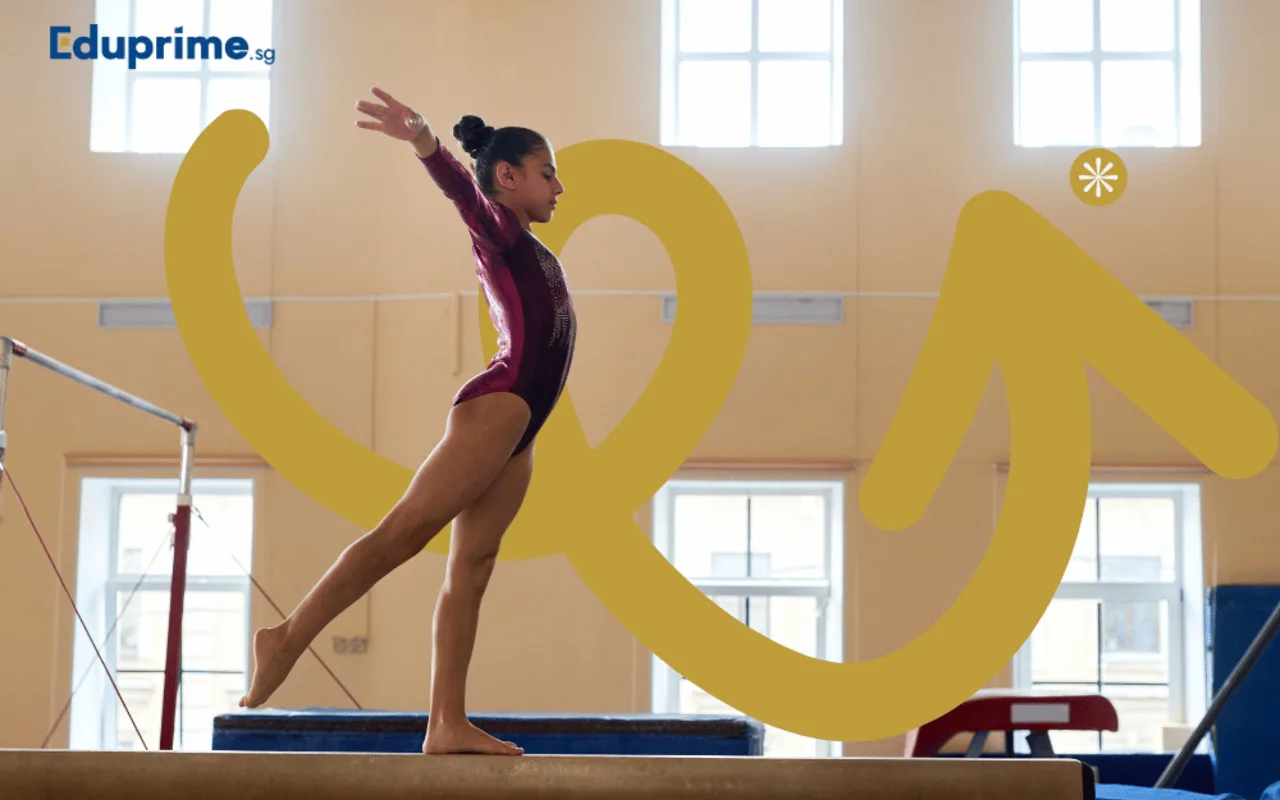
Gymnastics Coaching Singapore for Kids and Teens
Gymnastics coaching in Singapore for kids and teens: strength, flexibility, floor and apparatus, CCA and NSG. Coaches with 10+ years.
 4.6from S$22/session
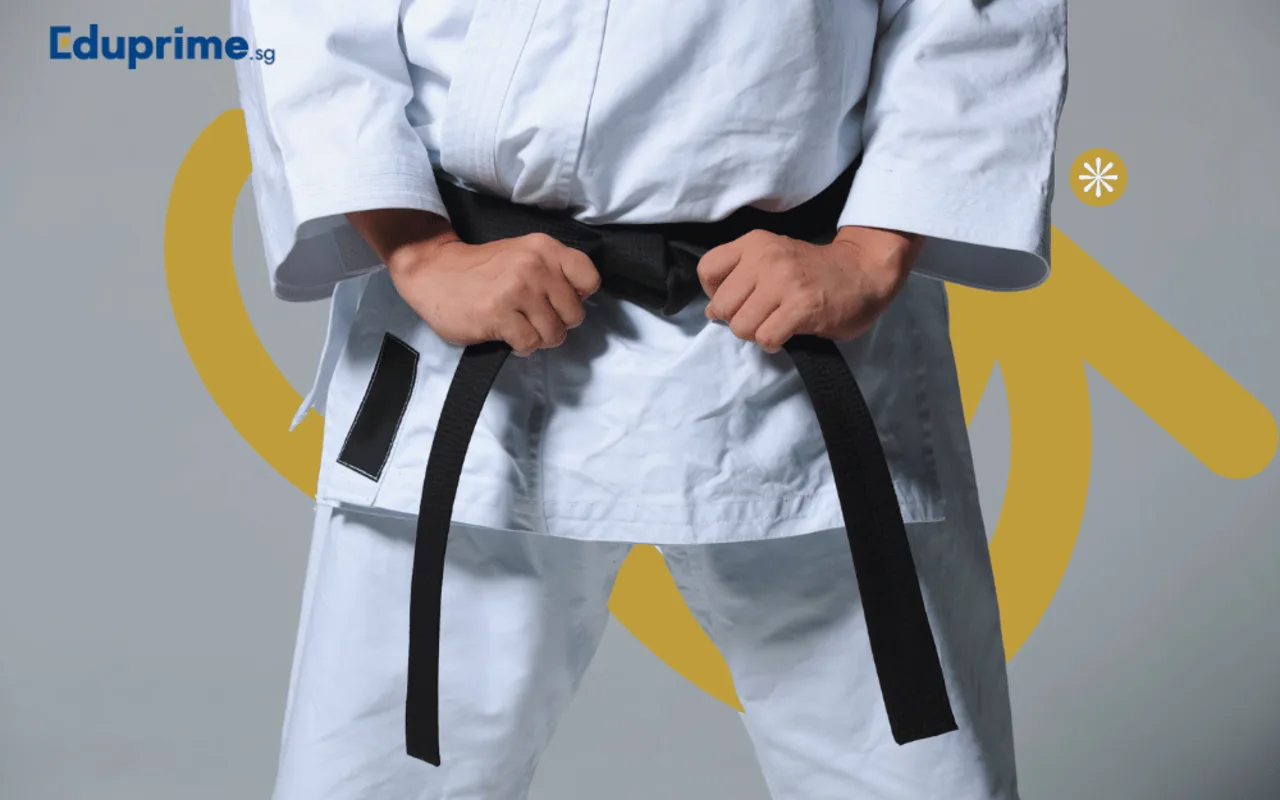
Martial Arts Coaching Singapore for Kids and Adults
Martial arts coaching in Singapore for all ages: taekwondo, karate, judo, BJJ, self-defence and belt grading. Coaches with 12+ years.
 4.9from S$24.50/session
Muay Thai Training Singapore in the Art of Eight Limbs
Muay Thai training in Singapore for fitness seekers, first-timers and amateur fighters. Thousands have trained with our coaches.
- 4.8from S$38/session
Personal Fitness Coaching Singapore with Experienced Coaches
Personal fitness coaching Singapore for fat loss, strength and IPPT goals. Hundreds of clients train with us. In person or online.
 4.7from S$38/session
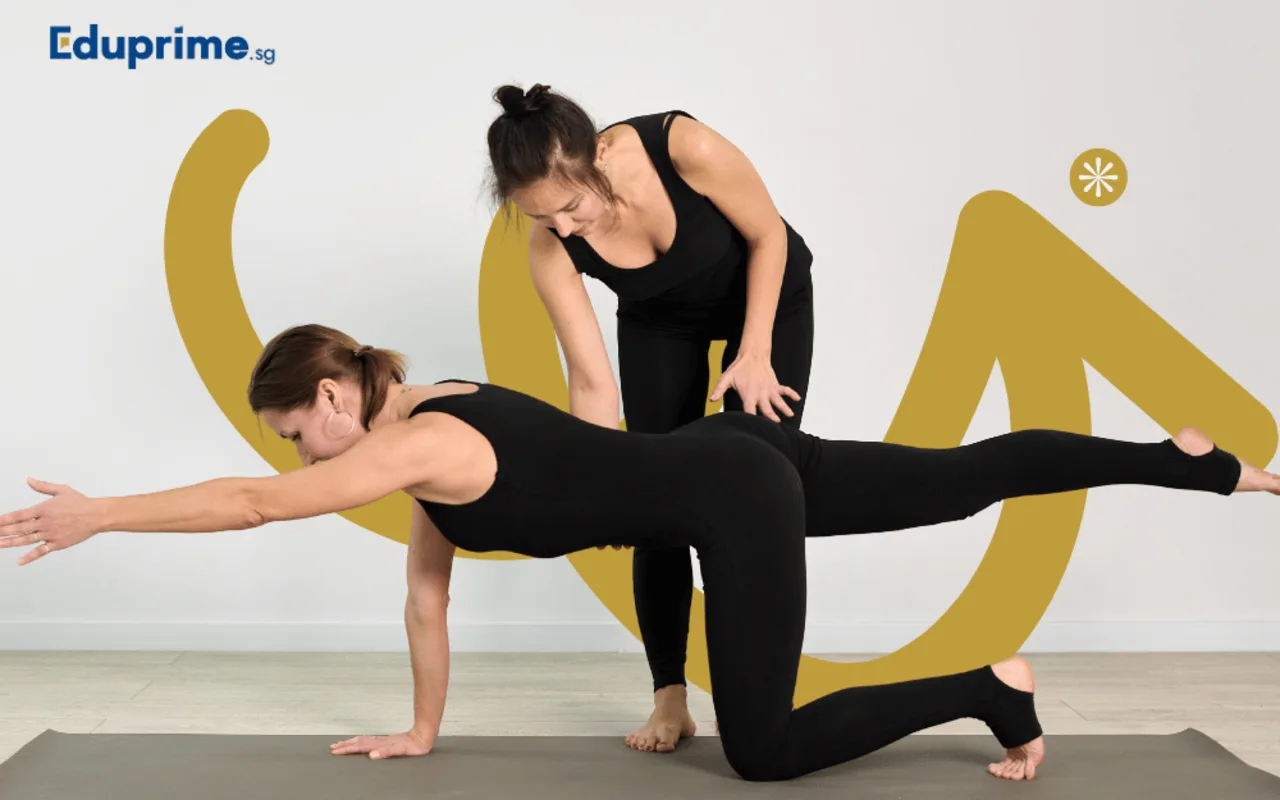
Pilates Training Singapore at Home or Online
Pilates training in Singapore for desk-bound backs, beginners and post-rehab clients. Instructors with 9+ years on the reformer.
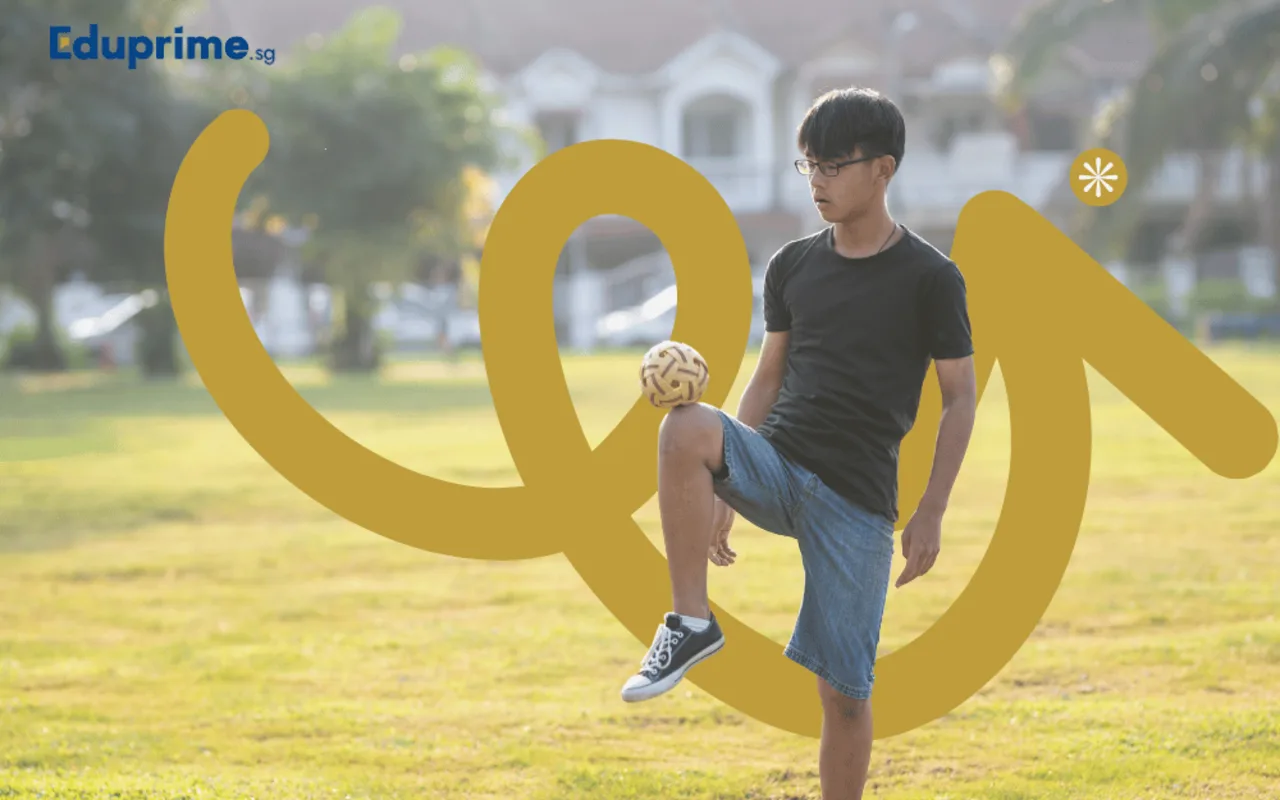 4.6from S$22/session
Sepak Takraw Training Singapore for School and Club Players
Sepak takraw training in Singapore for CCA and club players: tekong serve, controls, roll-spike. Coached by 10+ year squad veterans.
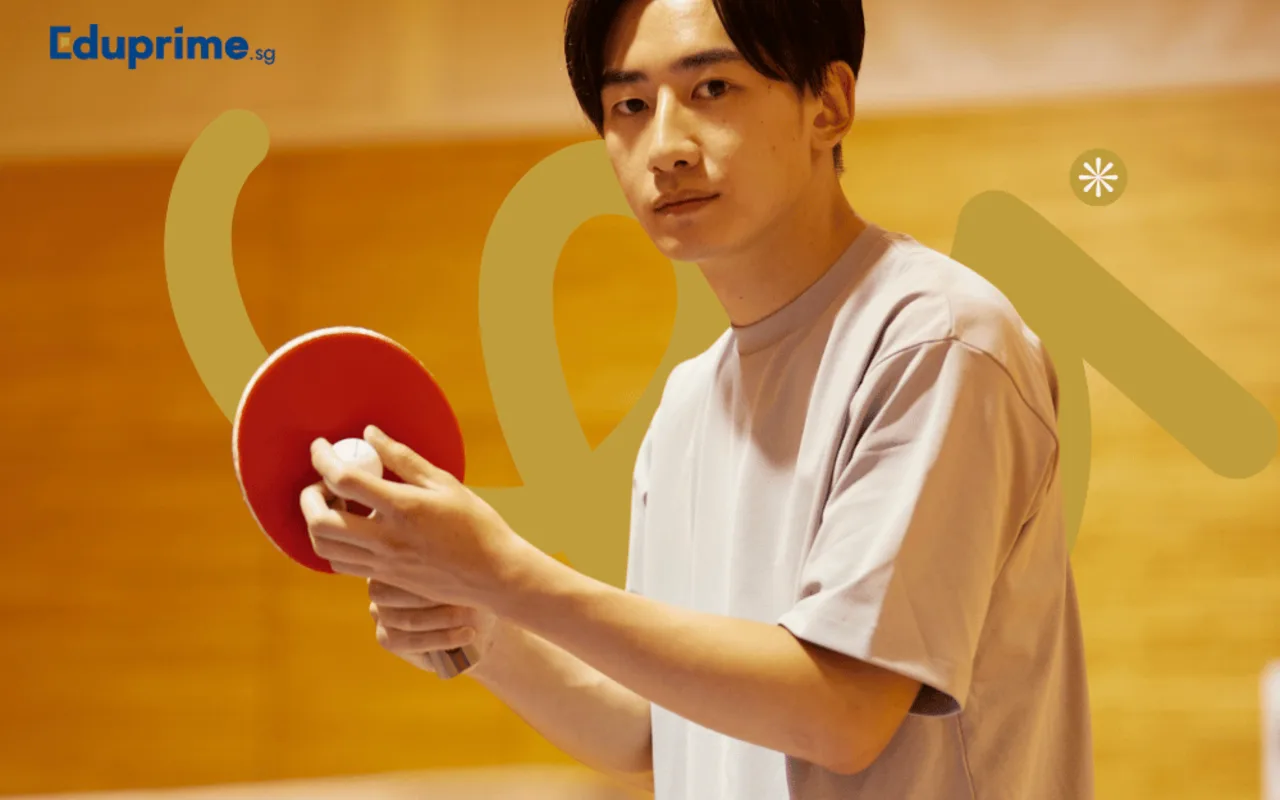 4.8from S$22/session
Table Tennis Tuition Singapore for CCA, NSG and STTA Pathway Players
Table tennis tuition in Singapore for CCA players, young beginners and STTA-pathway competitors. Loved by thousands of learners.
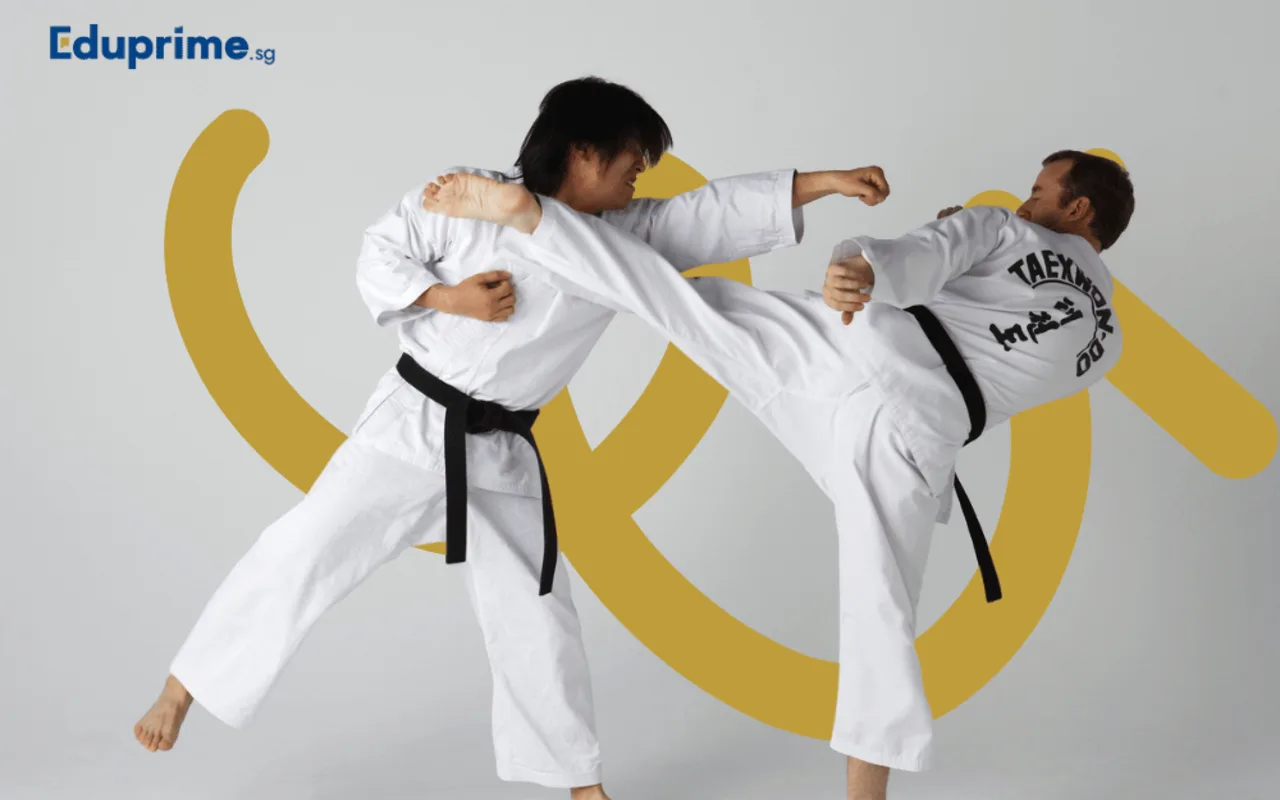 4.8from S$22/session
Taekwondo Tuition Singapore, White Belt to Dan
Taekwondo tuition in Singapore for kids and adults, white belt to poomsae, sparring and dan grading. Coaches with 12+ years.
 4.9from S$22/session
Volleyball Tuition Singapore, from First Bump to Six-Player Rotation
Volleyball tuition in Singapore for new players, CCA hopefuls and club-pathway athletes. Thousands of players train with us.
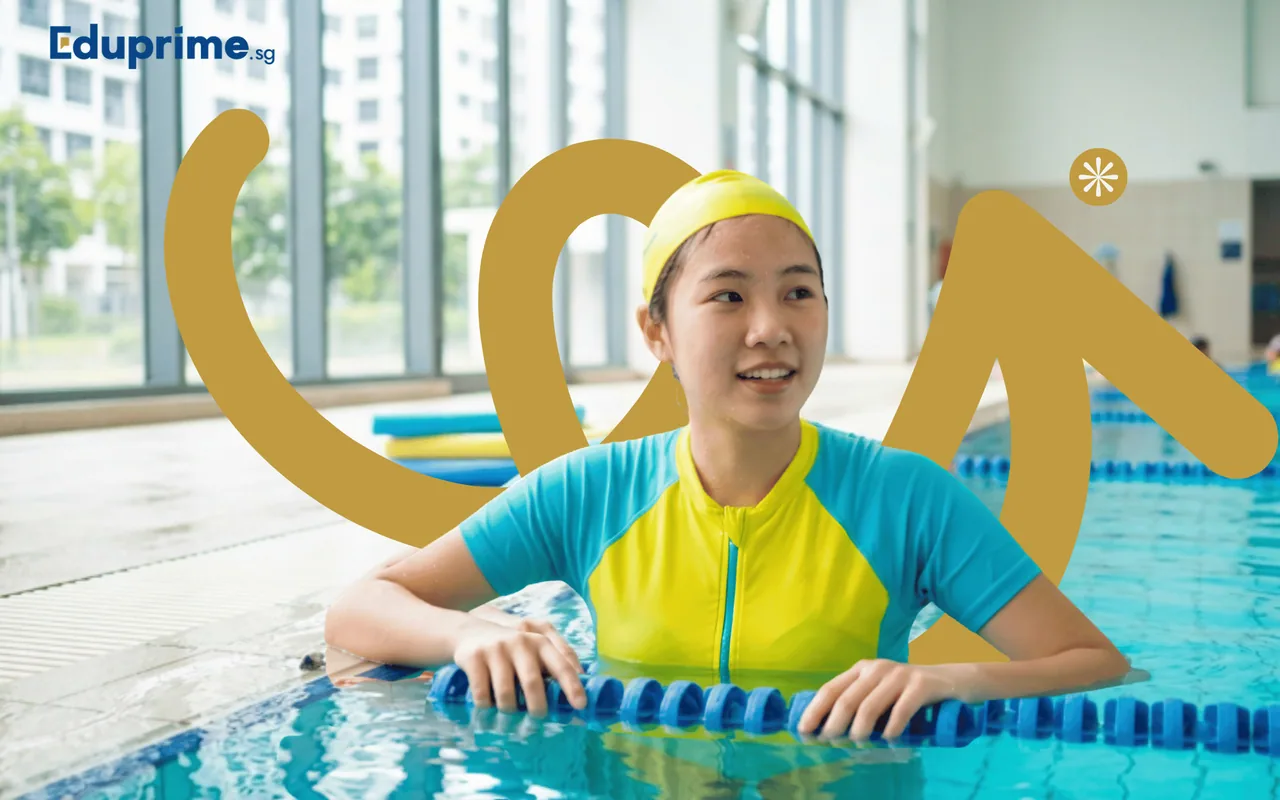 4.9from S$28.50/session
Swimming Lessons Singapore at Your Condo Pool
Swimming lessons in Singapore at your condo or ActiveSG pool, for kids and adults up to SwimSafer. Coaches with 12+ years poolside.
 4.6from S$22/session
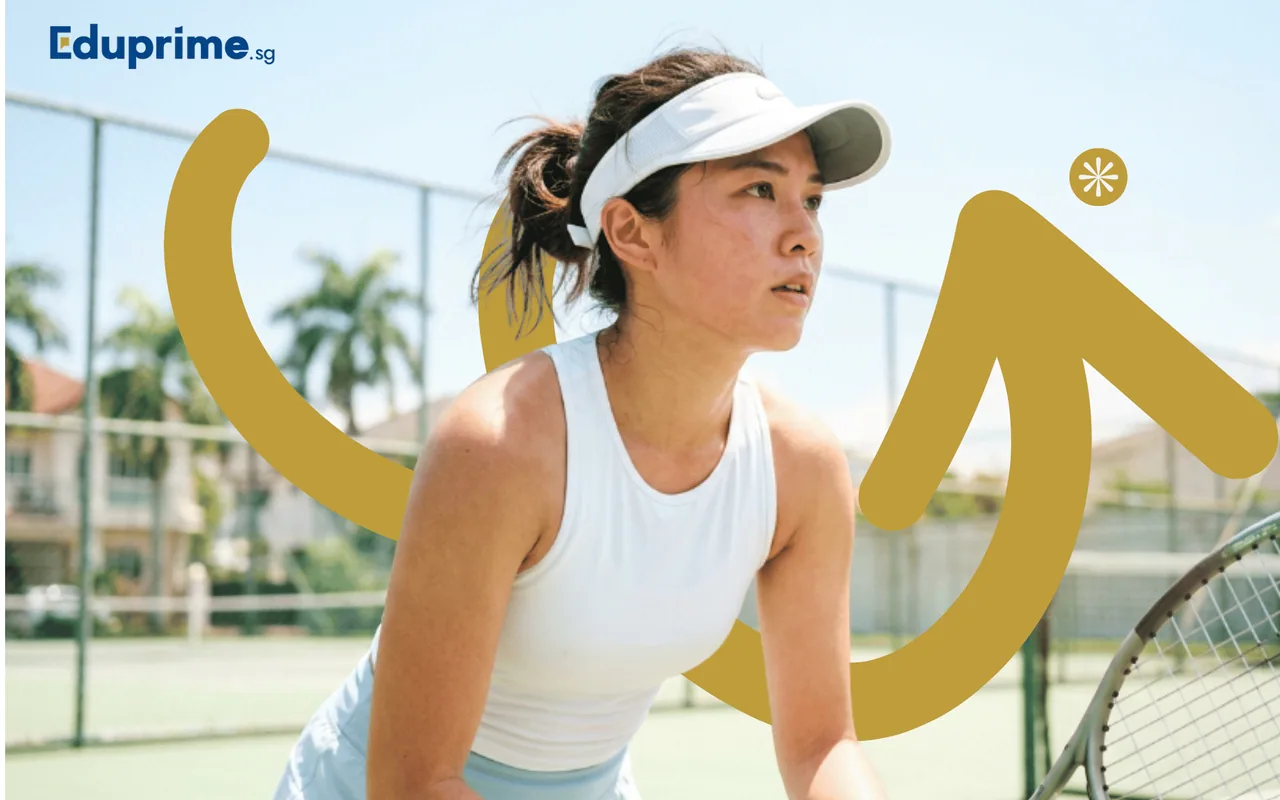
Tennis Lessons Singapore for Kids and Adults
Tennis lessons Singapore for kids and adults, from Tennis 10s ball stages to match play. Coach matched to your town. 1-to-1 at your court.